Made in America

The Arc of
American Industry

How a nation of builders lost its way — and started building again.

Era I

The Rise

1825 — 1969

In a century and a half, the United States went from an agrarian republic to the most productive industrial power the world had ever seen.

380K → 24M
Tons of steel / year (1875–1910)
300,000+
Aircraft built in WWII
$500B
US GNP by 1960
1825

Erie Canal Opens

A 363-mile waterway connecting the Great Lakes to the Atlantic via the Hudson River. It cut freight costs by 90% and turned New York into America's commercial capital. By 1841, a million bushels of wheat moved through it annually.

Freight cost: $100/ton → $10/ton
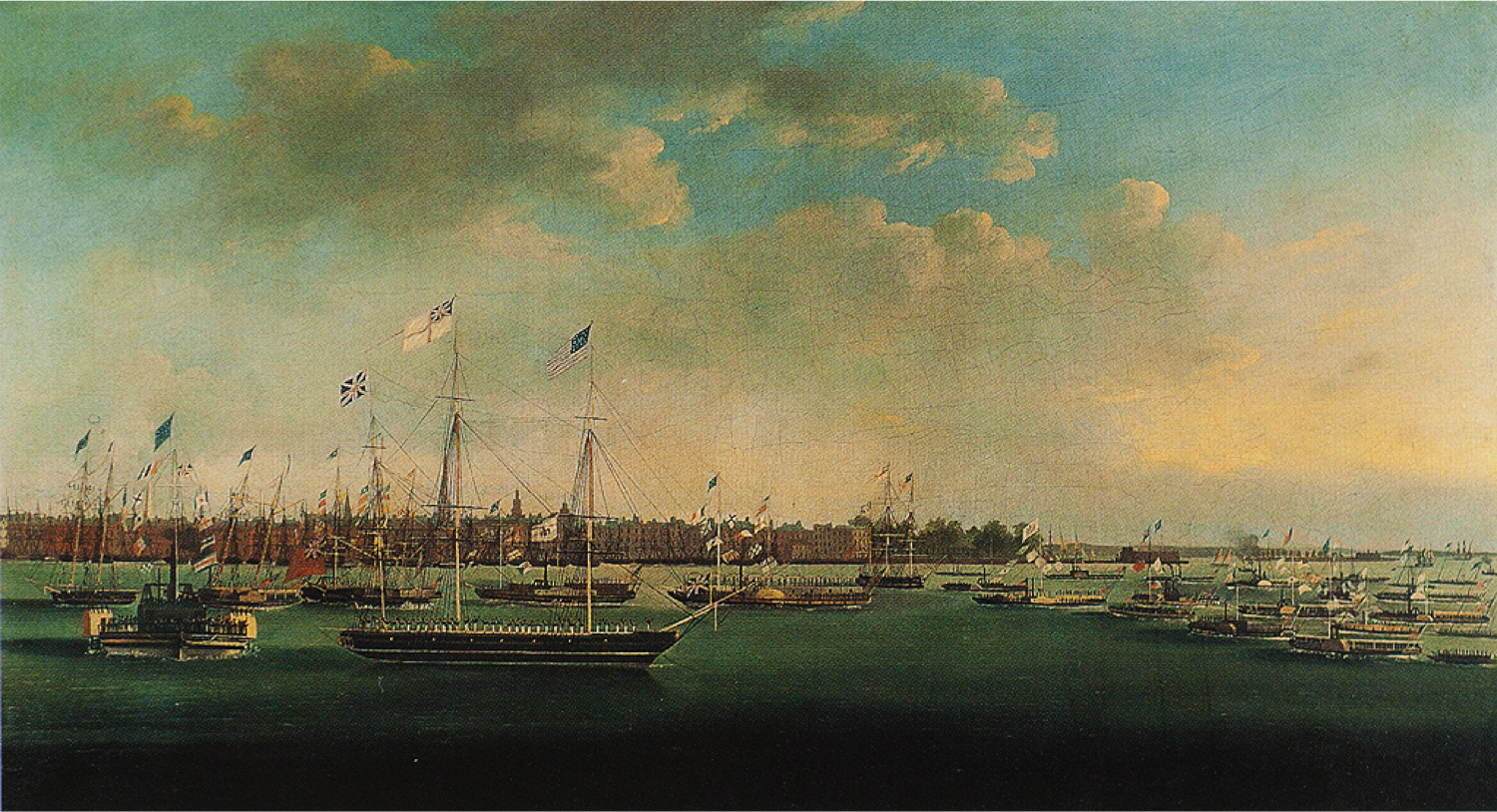
Historical illustration of the Erie Canal
1856 – 1900

The Steel Age

Henry Bessemer patents a method to mass-produce steel. Andrew Carnegie sees the potential and builds the Edgar Thomson Steel Works outside Pittsburgh — vertically integrating mining, transport, and production. Steel rail prices drop from $100/ton to $18/ton in 15 years. American steel output goes from 380,000 tons to 24 million tons by 1910. Steel becomes the skeleton of American power.

$100/ton → $18/ton in 15 years
1869

Transcontinental Railroad Completed

The golden spike is driven at Promontory Summit, Utah. For the first time, the Atlantic and Pacific coasts are linked by rail. Between 1871 and 1900, 170,000 miles of track are laid across the nation.

Coast-to-coast: 6 months → 6 days
1908

Ford Model T & The Moving Assembly Line

Henry Ford introduces the Model T and, by 1913, perfects the moving assembly line at Highland Park. Production time drops from 12 hours per car to 93 minutes. Manufacturing becomes a system — and America becomes a nation of builders.

12 hours → 93 minutes per vehicle
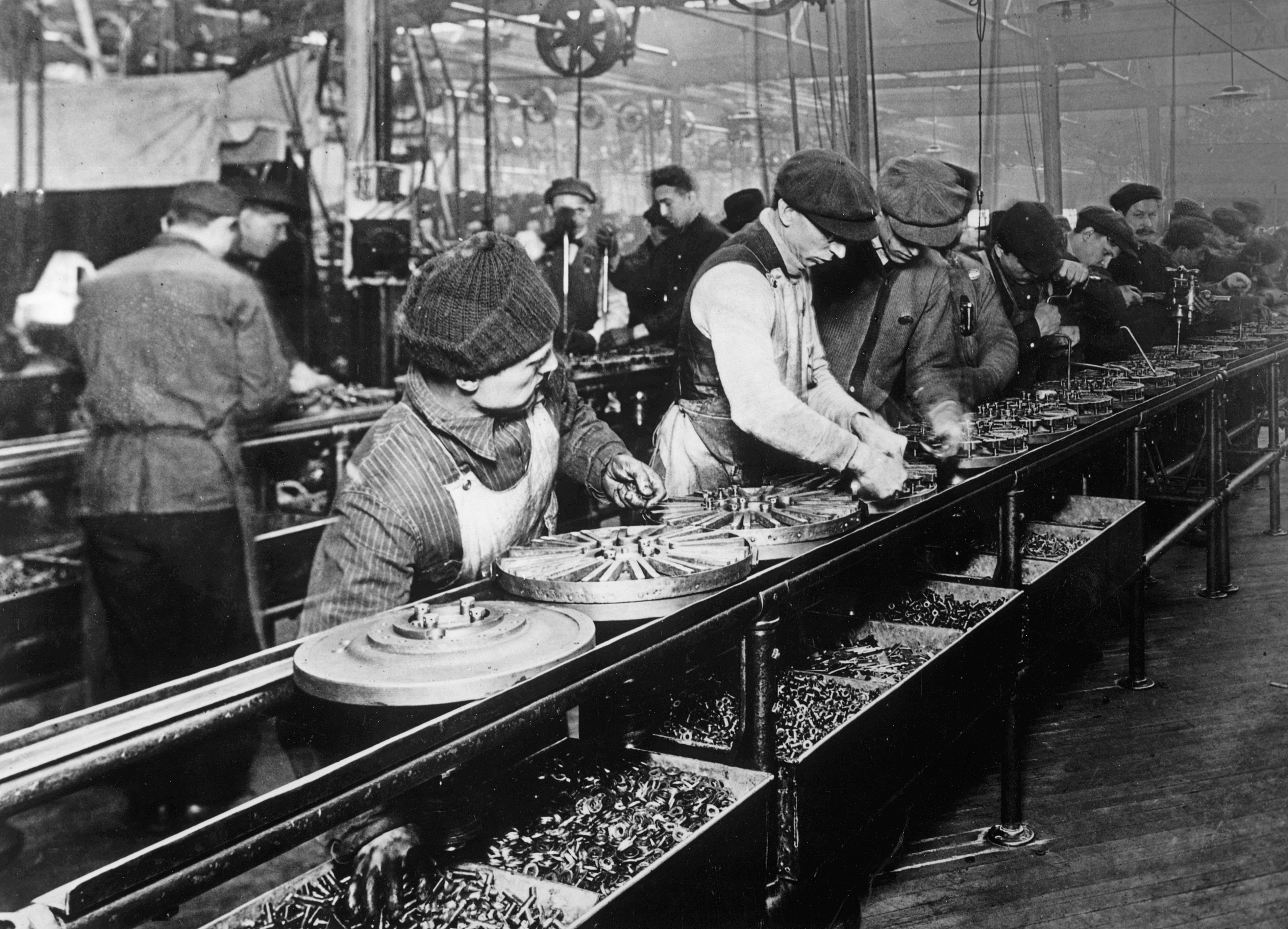
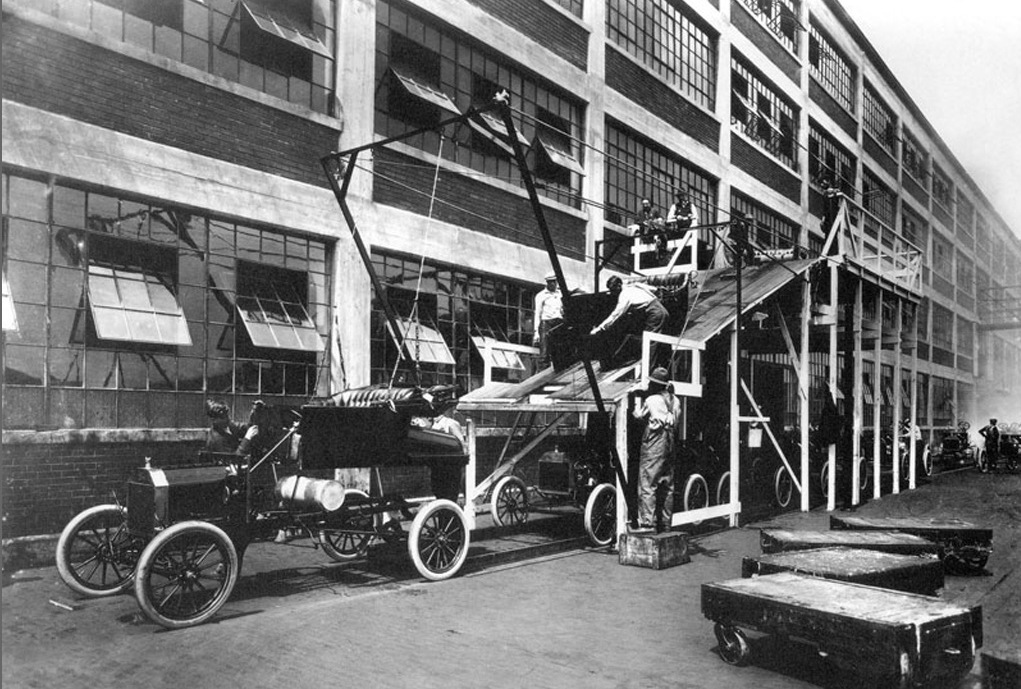
Ford Model T assembly line at Highland Park, 1913
Ford assembly line workers, Highland Park
1940

“Arsenal of Democracy”

FDR's December 29 fireside chat redefines American industry's purpose. The US economy — already producing more steel than Germany and mining twice its coal — pivots to full wartime production. Ford's Willow Run plant will build a B-24 bomber every 63 minutes by 1944.
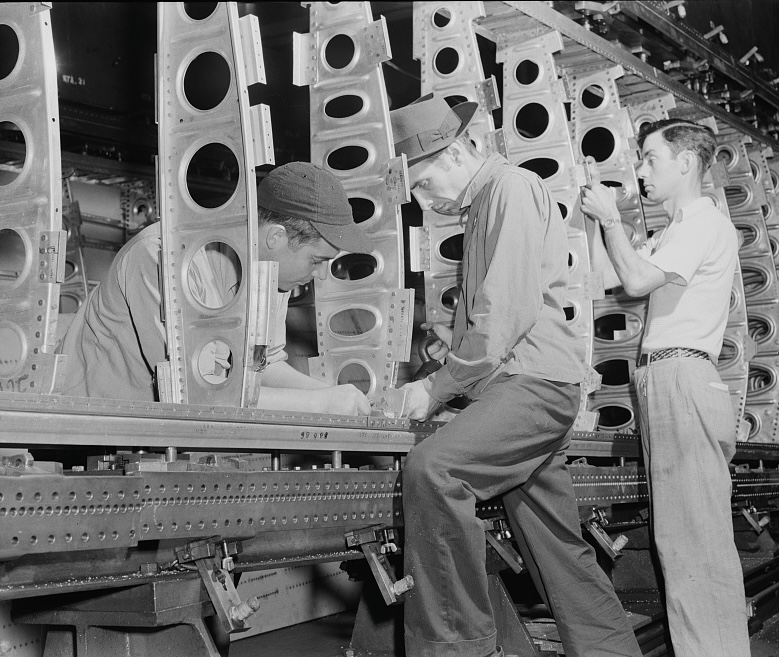
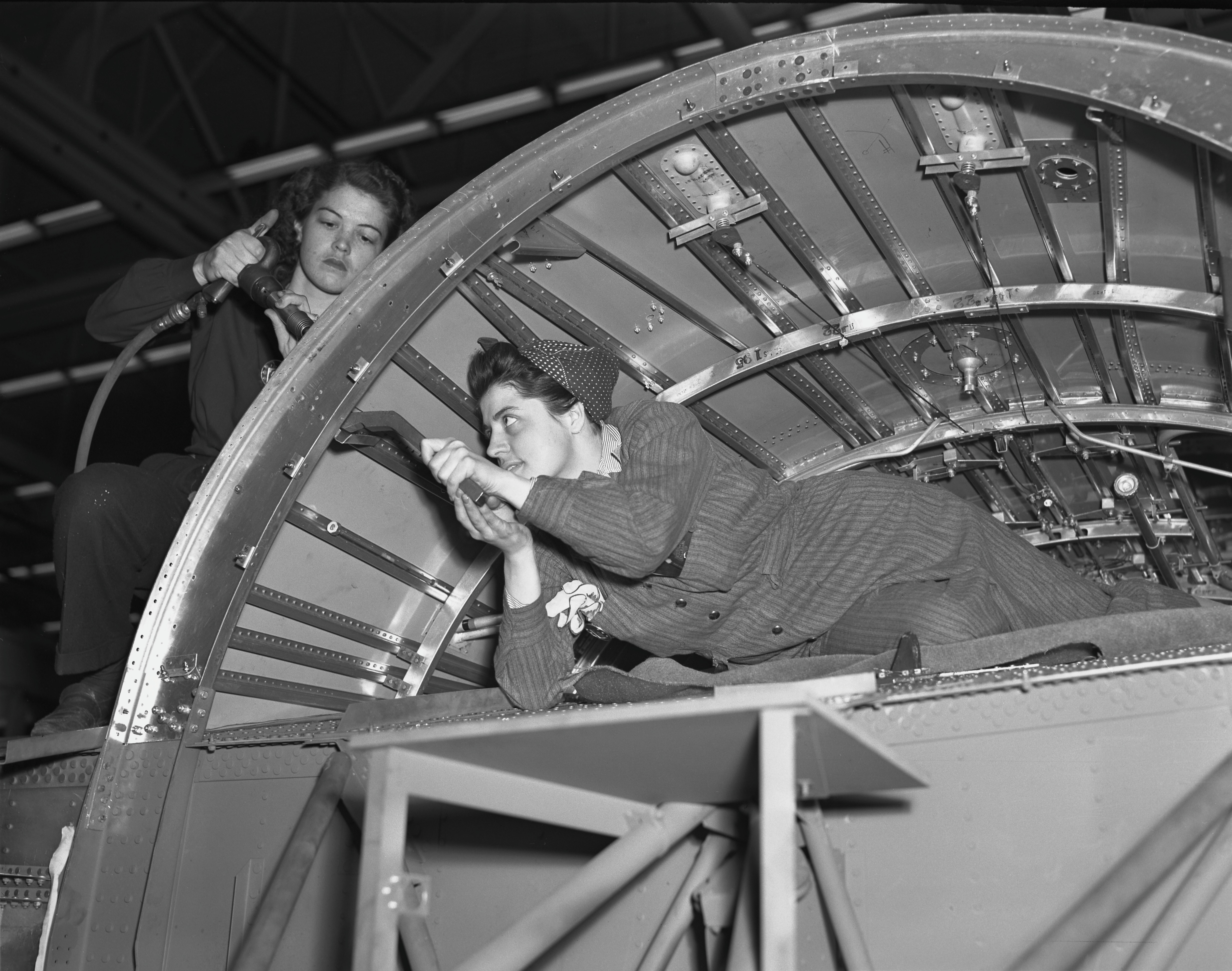
B-24 Liberator bombers on the Willow Run production line, WWII
Workers on the Willow Run production line, WWII
1940 – 1945

WWII: Peak American Production

The United States produces more munitions than all allies and enemies combined. The numbers are staggering: 300,000+ aircraft, 20,000 ships, 90,000 tanks, 350,000 trucks, 40 billion rounds of ammunition. American manufacturing wins the war.

At peak: more output than all other nations combined
1944

The GI Bill

The Servicemen's Readjustment Act sends nearly 8 million veterans to college or vocational training and helps 4.3 million purchase homes. The single largest investment in human capital in American history — it doesn't just reward service, it builds the middle class that the postwar boom will run on.

7.8M veterans educated; 4.3M home loans
1950

Deming Goes to Japan

W. Edwards Deming, an American statistician, is invited by Japanese scientists and engineers to teach quality control. Over 68 days, he delivers 10 lectures that will reshape Japanese manufacturing. Japan takes his ideas and builds a national identity — kaizen, monozukuri — around the pursuit of craft. America, where the ideas originated, never does.

1950s

The Postwar Boom

Bomber factories pivot to cars, refrigerators, and television sets. GNP hits $300B by 1950 — up 50% from 1940 — and $500B by 1960. America builds the interstate highway system, the suburbs, and the largest middle class in human history.

1957 – 1969

The Space Race

Sputnik shocks America into action. NASA mobilizes 400,000 engineers, scientists, and technicians. On July 20, 1969, Apollo 11 lands on the moon — the ultimate proof of American industrial and technological supremacy.

400,000 workers across 20,000 companies
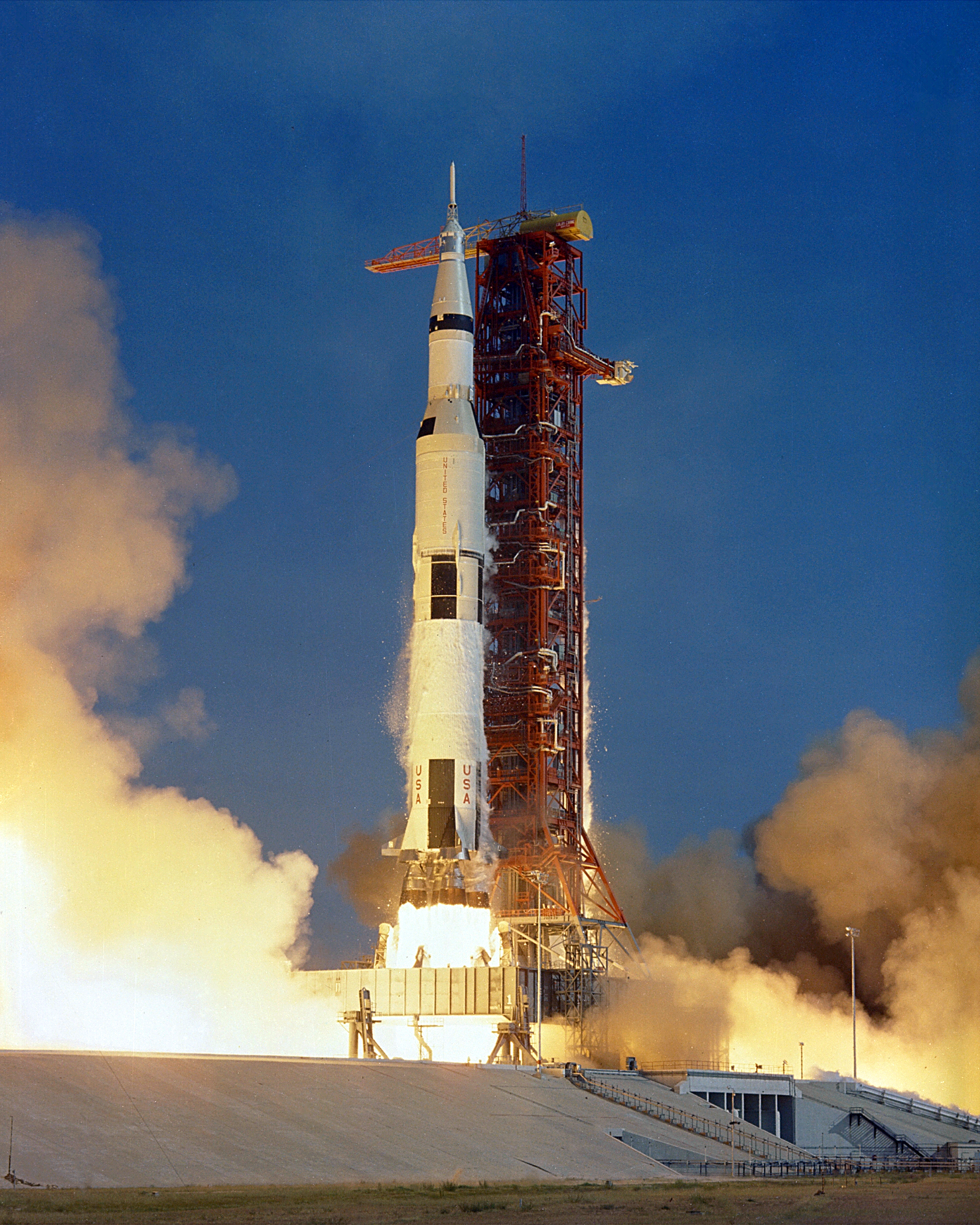

Saturn V rocket launching, July 1969
Buzz Aldrin on the lunar surface, July 1969
Then we stopped
Era II

The Decline

1968 — 2009

Decades of trade policy, cheap labor arbitrage, and short-term thinking hollowed out the industrial base that won the war and built the middle class.

-5.8M
Manufacturing jobs lost (2001–2010)
57,000
Factories closed
-44%
Mfg jobs below 1979 peak (by 2004)
1968 – 1975

The Fracture

Vietnam, Watergate, oil shocks, stagflation. In less than a decade, public trust in American institutions collapses. The cultural consensus that held the postwar project together — build, grow, lead — splinters. The economic decline that follows isn't just about trade policy. The shared identity breaks before the factories close.

Vietnam War era photograph
Nixon resignation / Watergate
1971

Nixon Ends the Gold Standard

The US suspends dollar-to-gold convertibility, untethering the currency from physical production. The financialization of the American economy begins. Wall Street starts to decouple from Main Street.

1979

Peak Manufacturing Employment

US manufacturing employment hits its all-time high of 19.6 million workers. It will never reach this level again. The Rust Belt doesn't know it yet, but the decline has already started.

19.6M workers — the high-water mark
1994

NAFTA Takes Effect

The North American Free Trade Agreement eliminates most tariffs between the US, Canada, and Mexico. Manufacturing begins migrating south. Proponents promise new jobs will replace old ones. For many communities, the replacement never comes.

2000s

The Hollowing Out

US multinationals cut 2.9 million domestic jobs while adding 2.4 million overseas. 57,000 manufacturing establishments close. The industrial knowledge base — the institutional know-how of making things at scale — begins to erode. Entire supply chains move to Asia.

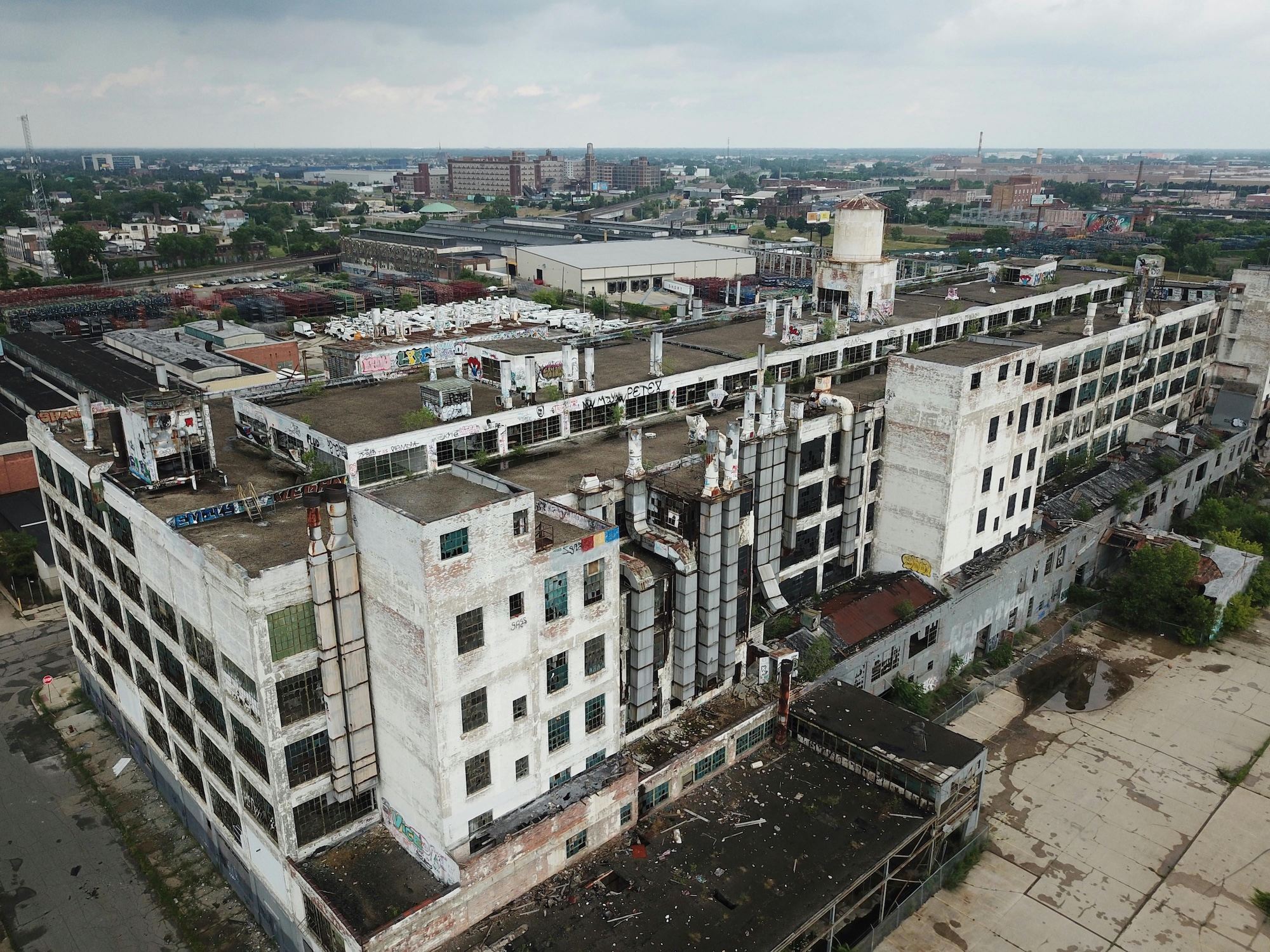
Shuttered industrial plant in the Rust Belt
2001

China Joins the WTO

The single most consequential trade event in modern American history. Two decades after Deng Xiaoping opened special economic zones to foreign investment, China gains permanent access to US markets — and the world's largest pool of low-cost labor meets the world's largest consumer economy. The trade deficit doubles to $162B by 2002 and doubles again to $345B by 2014. The “China Shock” wipes out factory towns across the Midwest and South.

3.7M US jobs lost to China trade (2001–2018)
2008

Financial Crisis & Auto Bailout

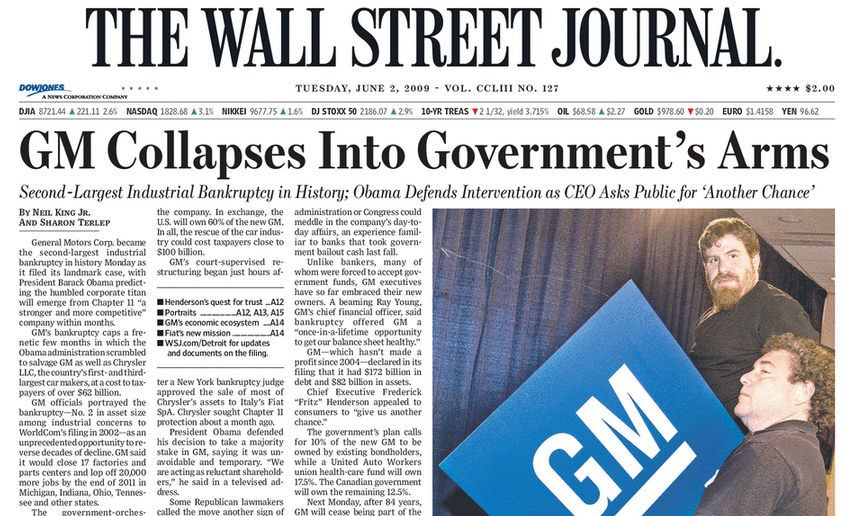
The financial system nearly collapses. GM and Chrysler require $80B in government bailouts. The crisis exposes the fragility of an economy that financialized its way out of production. Manufacturing's share of GDP continues to shrink.

Newspaper headline about the auto industry bailout
But started again
Era III

The Return

2002 — Present

The return didn’t wait for the decline to finish. A new generation of builders is rebuilding the industrial base — not by going back to the old playbook, but by writing a new one. Software-defined hardware. AI-native factories. Made in America is back.

$52.7B
CHIPS Act semiconductor funding
30%
Projected US share of leading chips by 2032
200+
New US factory announcements since 2021
2002

SpaceX Founded

Elon Musk bets that a private company can build rockets cheaper and faster than legacy aerospace contractors. Everyone thinks he's insane. He'll prove that Silicon Valley iteration speed can work in hardware — and reshape what's possible for American manufacturing.

SpaceX founding team
2017

Anduril Industries Founded

Palmer Luckey channels Oculus VR money and Silicon Valley engineering culture into defense technology. Anduril's thesis: the US needs a new kind of defense prime — one that builds software-defined autonomous systems, not $13B aircraft carriers that take a decade to deliver.

2020

COVID Exposes Supply Chain Fragility

The pandemic makes the abstract concrete. America can't source its own masks, ventilators, or pharmaceutical ingredients. Reshoring shifts from policy paper to political priority. Both parties agree: critical supply chains can't depend on adversaries.

2022

CHIPS and Science Act Signed

$280 billion authorized, with $52.7 billion appropriated for semiconductor manufacturing, R&D, and workforce development — including $39 billion in direct fabrication subsidies. The largest industrial policy investment since the space race. A bipartisan acknowledgment that markets alone won't solve the supply chain problem.

$39B in direct fab subsidies
Inside a modern semiconductor fabrication facility
2023 – 2024

The Reshoring Wave

TSMC opens its first Arizona fab. Intel breaks ground on two new plants in Ohio. Apple commits to $430B in US manufacturing investment over five years. After decades of offshoring, the largest companies in the world are building factories on American soil again. Over 200 new manufacturing facilities announced since 2021.

$430B — Apple's US investment commitment
2024

SpaceX Catches the Booster

Starship's Super Heavy booster is caught mid-air by the launch tower's “chopstick” arms. A technical feat that would have been unimaginable from a government program. The iteration model is proven at the largest scale ever attempted. This is what American industry looks like when it moves fast.

2025

Arsenal-1

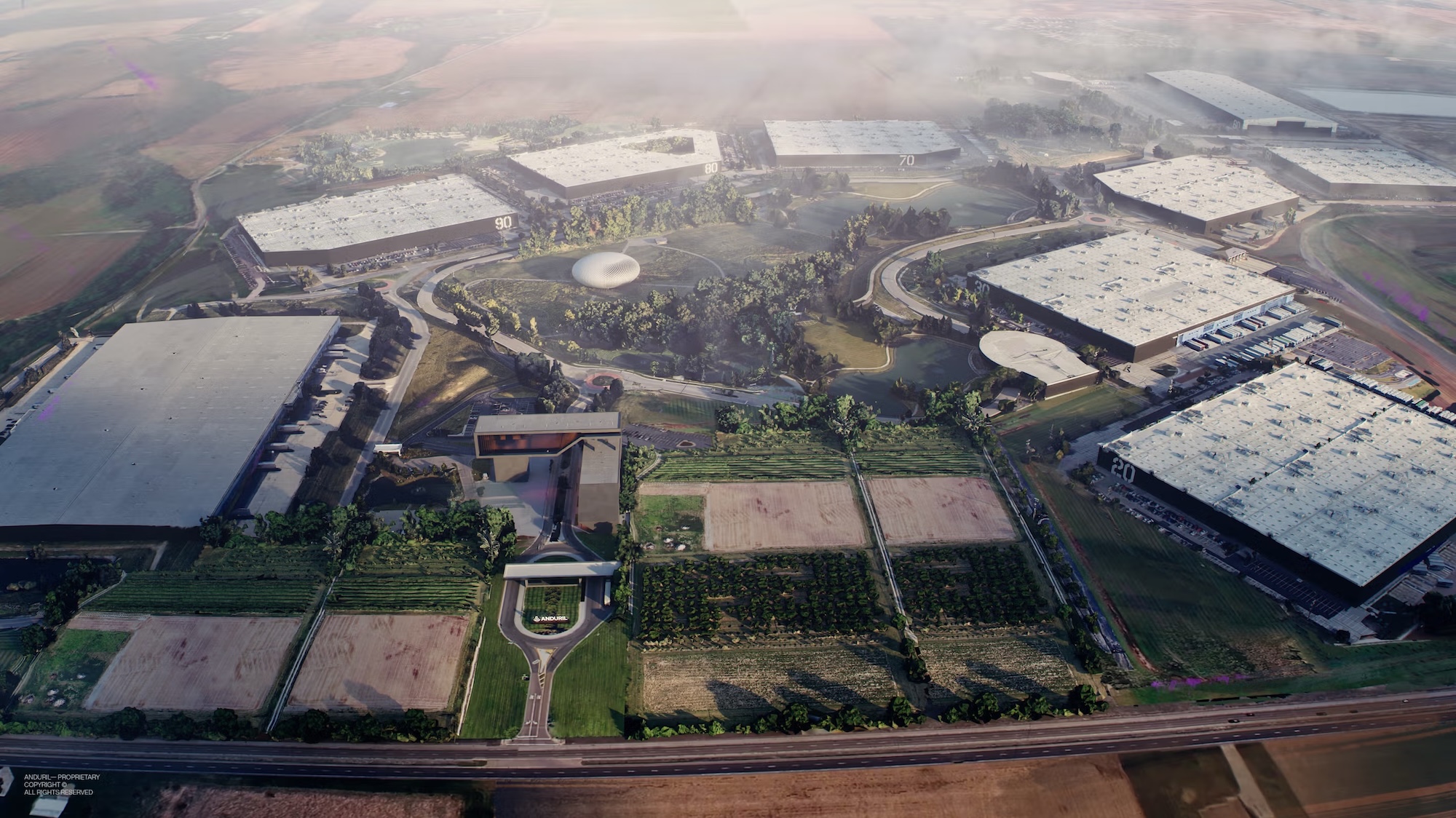
Anduril breaks ground on Arsenal-1 — a 5 million square foot autonomous manufacturing facility in Columbus, Ohio. Software-defined production lines. AI-driven quality control. The largest weapons factory built in America in decades. The neoprimes aren't just prototyping anymore. They're mass-producing.

5M sq ft — America's new arsenal
Arsenal-1 autonomous manufacturing facility
Now

The Story Is Being Written

For the first time in half a century, America is building again — not out of nostalgia, but out of necessity and ambition. The factories are rising. The engineers are coming home. The capital is flowing. Whether this moment becomes a lasting reindustrialization or another false start depends on what happens next. The arc bends toward the builders.