Back to Relay
PO-Relay
Diagnosing the gap between a compelling supply chain product and the narrative needed to sell it.
Diagnosing the gap between a compelling supply chain product and the narrative needed to sell it.
PO-Relay had built something genuinely useful: an AI-powered tool that monitors a manufacturer's email inbox, extracts purchase order data from supplier communications, and surfaces it in a single dashboard — no ERP integration required. The product insight was correct. The problem it solves is real and well-documented across the industry.
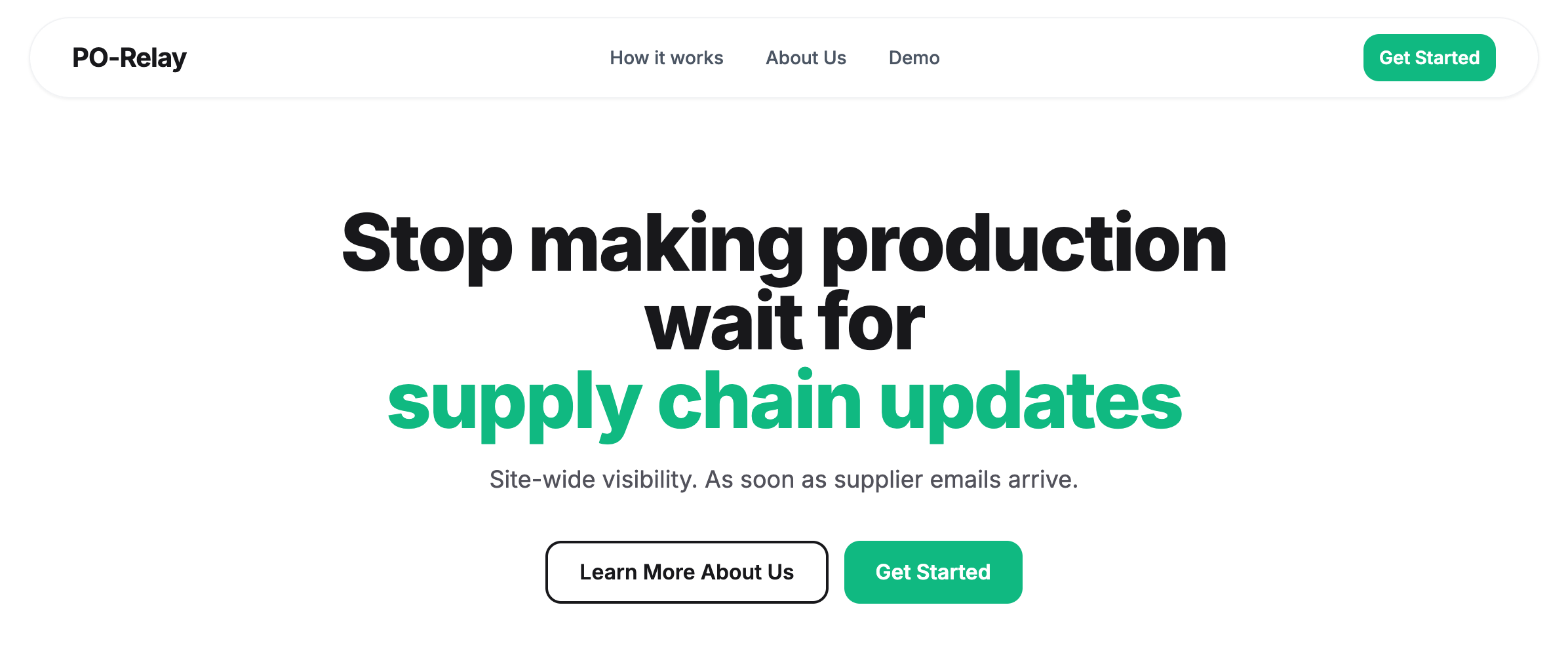
The brand hadn't caught up. The homepage led with features and mechanics, not the problem buyers actually feel. There was no articulation of who the product was for, what it costs them to operate without it, or why a procurement team should trust a new vendor with access to their inbox. The product was ready. The narrative wasn't.
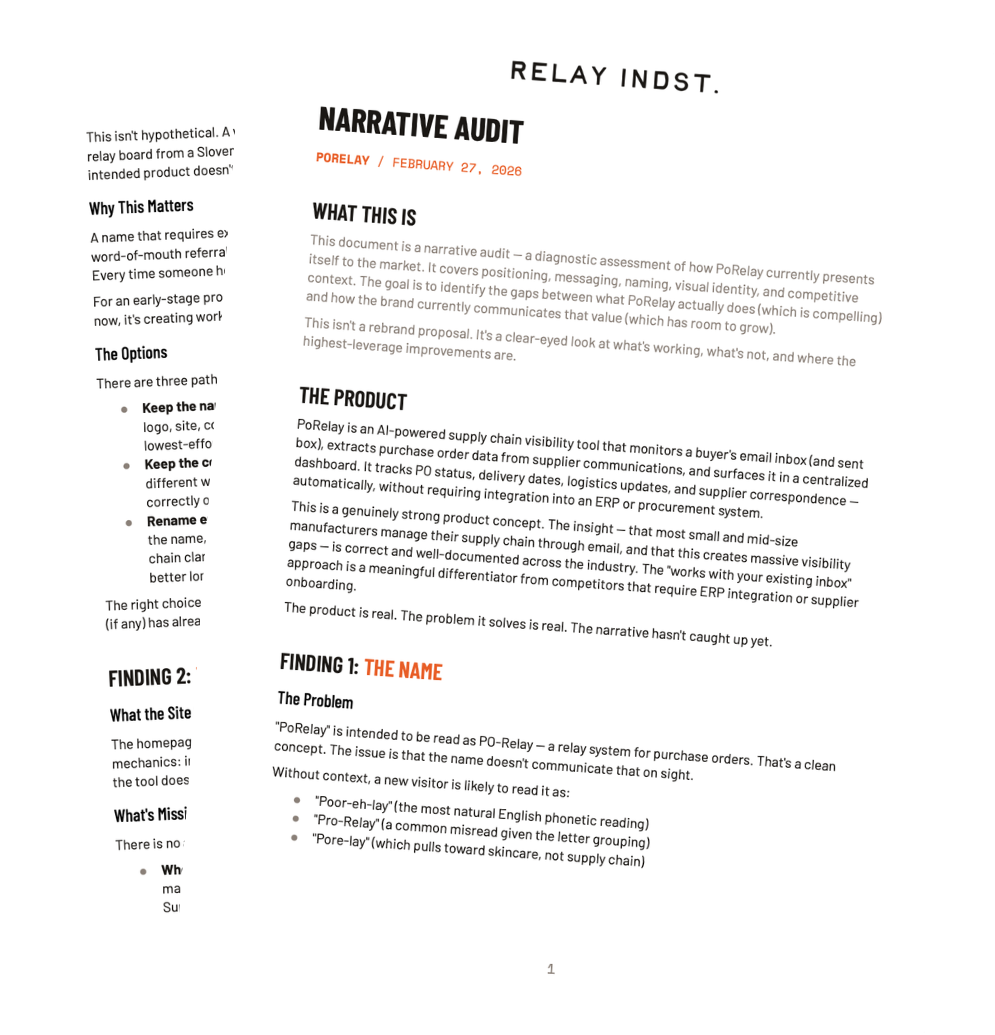
The engagement was a full narrative audit: a diagnostic assessment of how PO-Relay was presenting itself to the market, where the highest-leverage gaps were, and what a stronger positioning strategy would look like.
The audit surfaced five core findings — covering the product name, homepage narrative structure, competitive positioning, visual identity, and the missing founder story. Each finding included a concrete recommendation, not just a diagnosis.
The central strategic insight: PO-Relay's natural wedge isn't a feature — it's a philosophy. Every other solution in the space requires the buyer to change how they work. PO-Relay works with what they already have. That's not a bullet point. That's the entire story.
PO-Relay left the engagement with a clear map of what was working, what wasn't, and what to fix first. A positioning statement centered on the zero-integration deployment model. A recommended homepage structure built around problem, cost of inaction, and solution — rather than feature stacking. And a sharper understanding of where they sit in a competitive landscape that's active and well-funded.
The product was ready. It needed a story that could keep up.