Perspectives
The Invisible Cost of Undirected Signals
By Robert Johns
Most founders I work with care about how their company looks. They’ve worked at places that got it right. They have taste, they’ve seen what good looks like, and they want their own work to live up to the standard. The problem isn’t conviction. The problem is priority. There’s always something louder than how the company presents itself — the next milestone, the next round, the next ship date — and that work rarely wins that competition.
That’s reasonable. Raising matters. Shipping matters. The work itself is the thing. But how a company presents itself isn’t a category you can get to later.
Louis Cheskin, a market researcher in the 1940s, called it sensation transference. The idea is simple: people don’t separate the product from the package. The way something looks, feels, sounds — every surface signal — gets transferred onto their judgment of what’s inside. Change nothing about the product, only the wrapper, and people describe the contents as higher quality, more reliable, even better tasting. They’re not lying. People can’t help but read the package as a signal of what’s inside.
The Broadcast Doesn’t Stop
Putting it off doesn’t work because sensation transference is constant. It’s not a phase you can skip and circle back to. Every email, every deck, every cold note, every screen on your website is sending signals to someone right now, whether you’ve directed those signals or not. The broadcast doesn’t stop because you’re not paying attention to it.
This matters more in hard tech, defense, and aerospace than in most other industries because the buyers are reading risk, not features. A program manager at a defense prime, a partner at a fund, a procurement officer at a regulated agency — they can’t fully evaluate the engineering on their own. They evaluate the surface, and they extrapolate. A broken site suggests the code might be broken. Inconsistent documentation suggests the safety protocols are sloppy. That extrapolation isn’t unfair; it’s how humans navigate complexity under uncertainty.
The Cost Is Invisible by Design
The cost of getting it wrong is invisible. You don’t get explicit feedback. Nobody emails you to say your colors hurt their eyes, or that your deck contradicted your website, or that something about the cold email made them assume you weren’t a real company. They just don’t write back. I had a conversation with a client about how their brand colors were rendering across different applications, and the conversation turned to eye strain. Were they unintentionally creating discomfort that buyers wouldn’t articulate? Probably. Surfaces that are slightly off accumulate, and people drift away without ever telling you why.
These are quality cues. Every touchpoint a company has — the website, the deck, the email signature, the brand colors, the writing in a sales note — is a quality cue. Either you’re directing those cues, or they’re drifting on their own.
Craftsmanship
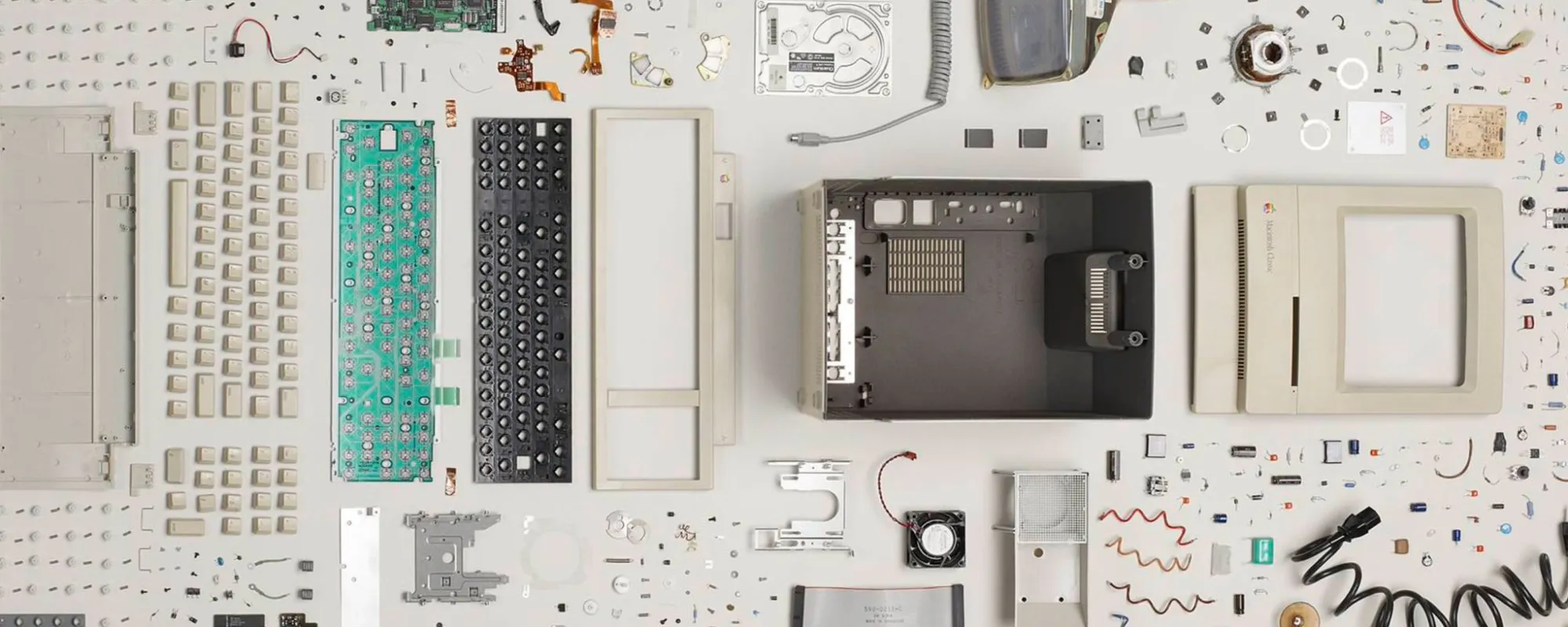
Steve Jobs called this discipline craftsmanship. When the original Macintosh was being designed in 1984, he insisted that the circuit board — which customers would never see once the case was sealed — be laid out beautifully. He even had the engineering team’s signatures molded into the inside of the case. Not because users would notice, but because the act of caring about the unseen parts shapes how the team builds the seen ones. You can try to compartmentalize — half-ass the website, pour your soul into the engineering — but it doesn’t hold. The work bleeds together.
Anduril applies a related discipline. Palmer Luckey has a rule that the company doesn’t show CGI renders of products that don’t exist yet. Every public image, every test video, every demo is real hardware doing real things — a discipline most legacy primes have abandoned in favor of speculative renderings of programs that may never ship. The discipline isn’t about polish. It’s about refusing to let the signals promise what the product can’t deliver.
The Surface Is Part of the Work
The thing that separates the founders who get this from the ones who don’t isn’t budget. Plenty of founders have spent serious money on identity work and ended up with signals that still feel off. Plenty of founders have spent almost nothing and built something that signals exactly what they wanted it to. The discriminating factor isn’t money. It’s whether the founder treats the surface as part of the work, or as the thing they’ll get to once the “real work” is done.
The line I keep coming back to is: how you do anything is how you do everything. The team that ships a half-baked website is signaling something about how they operate. The team that obsesses over the spec sheet but has a deck that contradicts the website is signaling something about coordination. None of these things is the product, but all of them are speaking on the product’s behalf, whether anyone intended them to or not.
Sensation transference is happening either way. The only question is whether the impression you’re giving is the one you want.
Originally published on X. Follow Robert Johns.